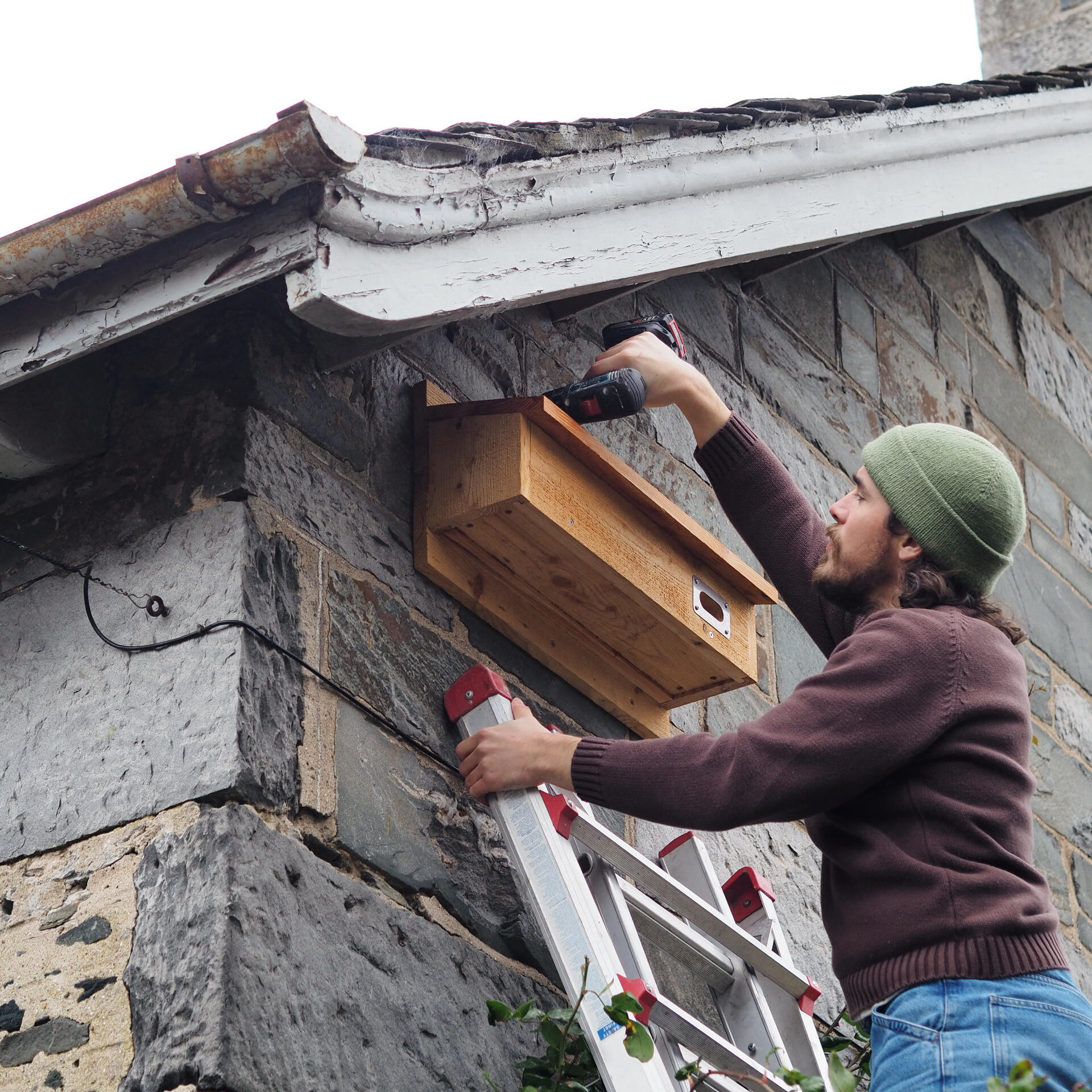
Now that your bird feeder is clean, it’s time to tackle the Nest Box. Who better to be your guide than Nestwood; makers of the strongest, safest, and most sustainable nest boxes in Europe. The ONLY makers of nest boxes in Scotland. They are a worker-owned, equal pay co-operative, co-founded by Nick and Stu.
Here’s Nick again, to bring you part two…
While most bird feeders are made of plastic or metal, a good nest box should always be made of thick, solid wood. This is because wood is a better insulator, has better breathability, and is, frankly, more attractive to nesting birds than either plastic, metal, or plywood. Wood has actually been found to have bactericidal properties too. But wood also needs care in order to preserve it and keep it safe for nesting birds. So, first we must bust a couple of myths.
Myth #1: You should pour boiling water into bird boxes to kill pathogens.
You should never get boiling water anywhere near wood; especially not a wooden bird box. While it may kill pathogens it will do far more harm than good because it could cause the joints of the bird box to fail and even cause the wood itself to crack and warp. These problems are far more dangerous to birds than the minimal pathogens left in the box after nesting season because physical failure of the nest box could mean ingress of water or, worse, catastrophic failure of the entire box over time.
Myth #2: You should sterilise the inside of bird boxes every year.
Again, this is unlikely to be necessary. In fact, the most robust study to date on whether cleaning bird boxes actually helps birds found that some birds did better with freshly laundered boxes while others did worse. The general advice is that you should clean out your boxes once per year. Our aim should not be to nuke every single pathogen inside of the box, it should simply be to keep a relatively clean, safe, and dry environment for our favourite garden birds.
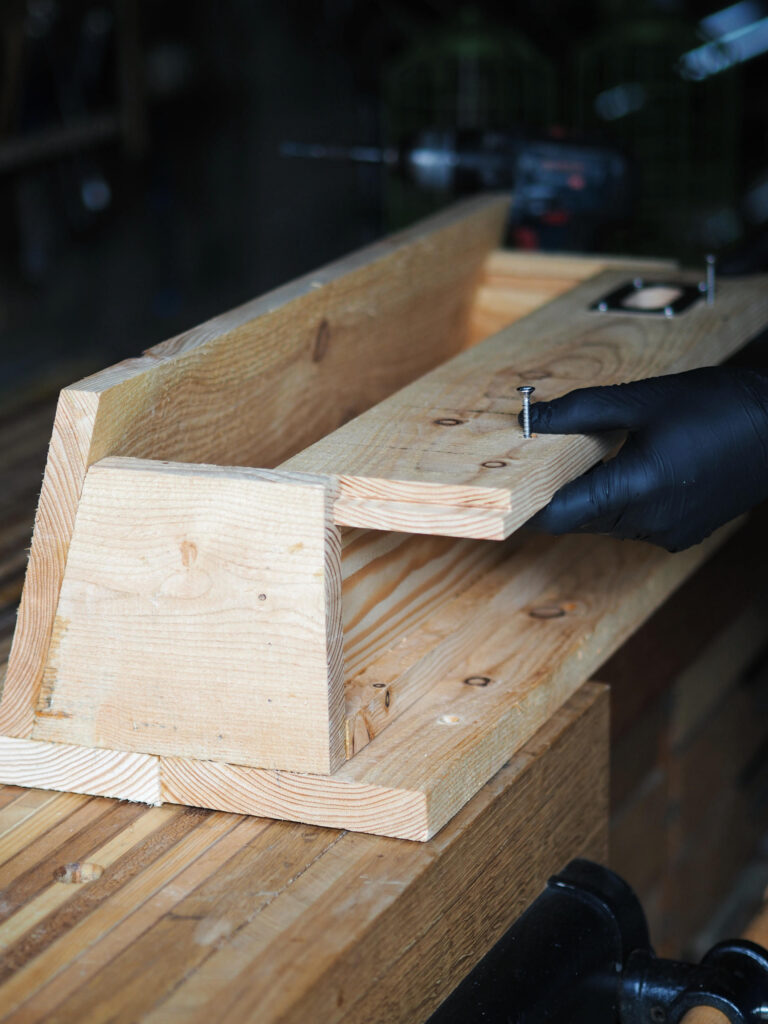
Step-by-step instructions for cleaning a nest box
Only clean a nest box when you are certain that there is no active nesting going on inside. Generally you are safe to clean them from the beginning of September to the end of January. It is illegal to disturb nesting birds so if in doubt, don’t clean it!
1 – Fill a bucket with warm tap water and Fill washing up liquid at a ratio of 5mL washing up liquid to 2.5L of water (1:500). You won’t need to soak the nest box so just make up enough of the mixture in order to slosh it into the box and scrub it around.
2 – If you can safely do so, remove the nest box from where it is mounted and bring it down to ground level to do your cleaning.
3 – Remove the front panel of your nest box (if you have a Nestwood box) or ensure that you can access the inside of the box for easy cleaning. If your box doesn’t have a removable top or front, or some other way to access the inside, then we recommend replacing it at the end of its life with one that does.
4 – Empty out any loose nesting materials from your nest box and dispose of them. Beware that you can sometimes find failed eggs or chicks in the nest and this can obviously be a bit difficult to see, however, know that it is a very natural thing to happen. It is illegal to keep wild bird eggs so make sure to bin them!
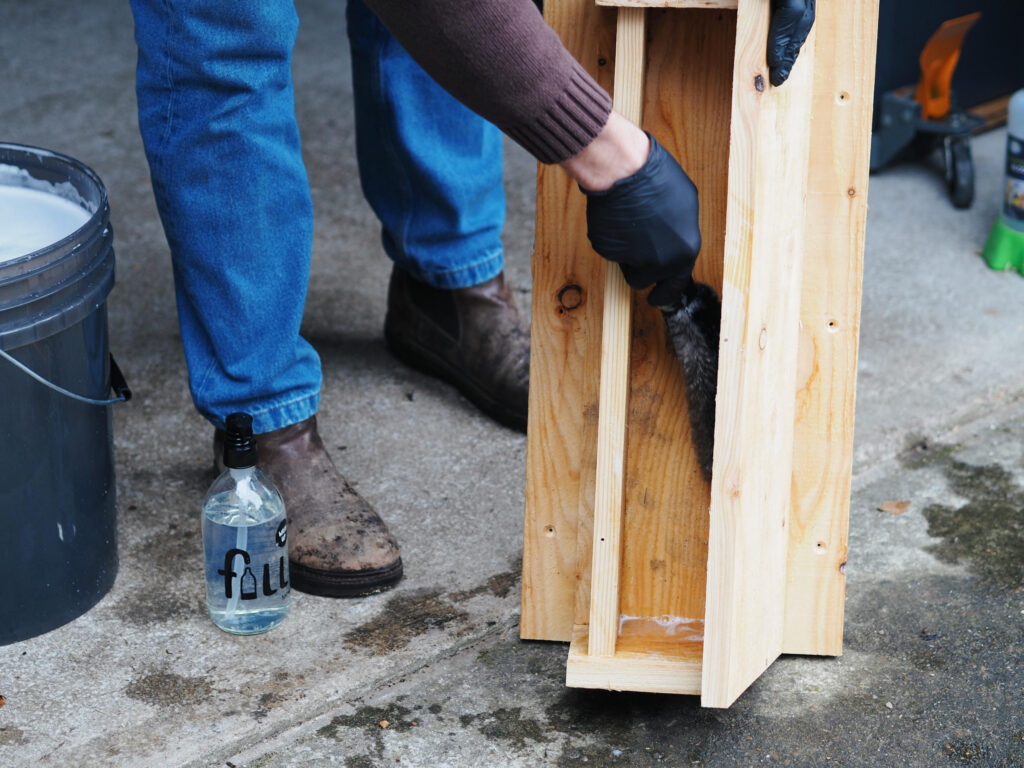
5 – Take a stiff-bristled brush (we recommend dedicating this brush forever as your bird brush), dip it into your soapy mixture, and scrub the entire bird box inside and out until there is no visible debris and for a minimum of 2 minutes. Keep dipping your brush into the soapy mixture frequently whilst scrubbing in order to get all the little nooks and crannies inside of the box.
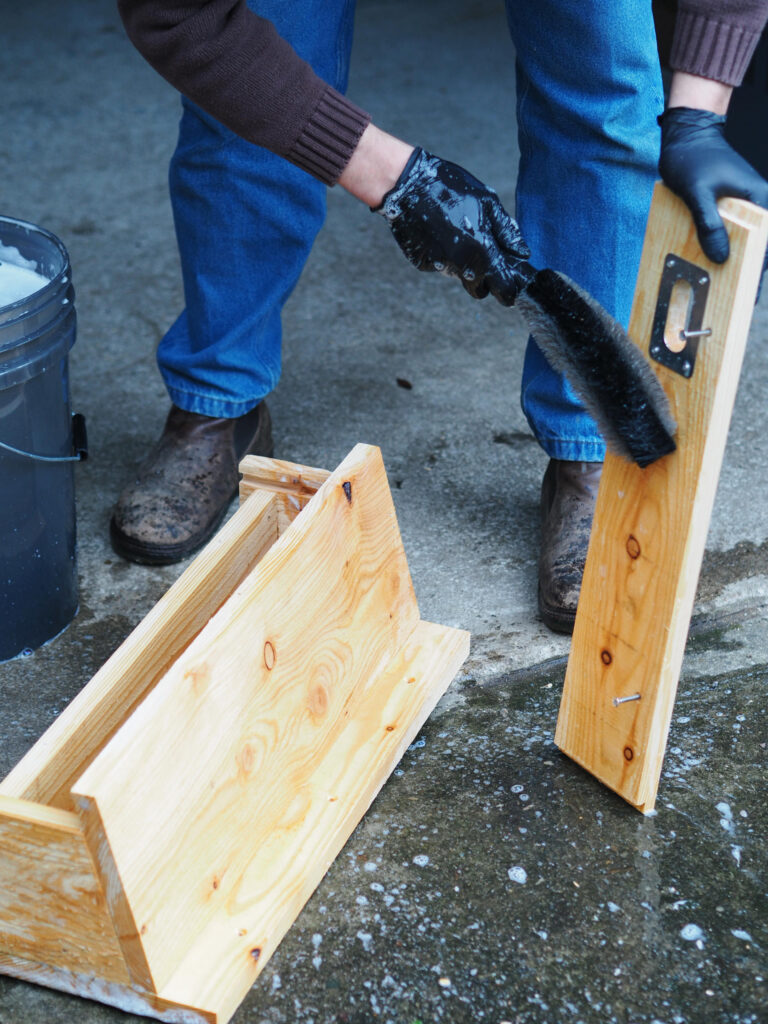
6 – Rinse the nest box with clean tap water and leave to air dry.
7 – Once dry, check that all debris has been removed from the nest box. If any remains, repeat from step 5 until no debris remains.
8 – Reinstall your nest box back in its rightful place (far away from prowling cats) so that you can help another family of birds raise their young next year!
Here in Scotland in November, the trees have dropped their leaves, the Starlings have cleaned the Rowans of their berries, and the bird boxes mounted all around our garden and workshop have been cleaned thoroughly and await next year’s feathered families. It sometimes feels as though there is little to look forward to on dreich wintery days, but if you sit for a moment you’ll see the Coal Tits dropping by to collect sunflower seeds and the Blackbirds cleaning up the dropped, fermenting berries. Robins will shortly be pairing off and in only a few months the nest boxes will be filled again with the earliest opportunists. In the meantime we will keep our feeders filled and, at the end of April, take them down, clean them again, and store them away until the cold returns (which never takes very long this far north).
Citations:
Anja Bischoff, Thomas Alter, Antje Schoenknecht, Hygienic Evaluation of Wooden Cutting Boards: Microbiological Parameters, Journal of Food Protection, Volume 88, Issue 9, 2025, 100576, ISSN 0362-028X, https://doi.org/10.1016/j.jfp.2025.100576.
Williams, D.R., Child, M.F., Dicks, L.V., Ockendon, N., Pople, R.G., Showler, D.A., Walsh, J.C., zu Ermgassen, E.K.H.J. & Sutherland, W.J. (2020) Bird Conservation. Pages 137-281 in: W.J. Sutherland, L.V. Dicks, S.O. Petrovan & R.K. Smith (eds) What Works in Conservation 2020. Open Book Publishers, Cambridge, UK. https://www.conservationevidencejournal.com/actions/499.