


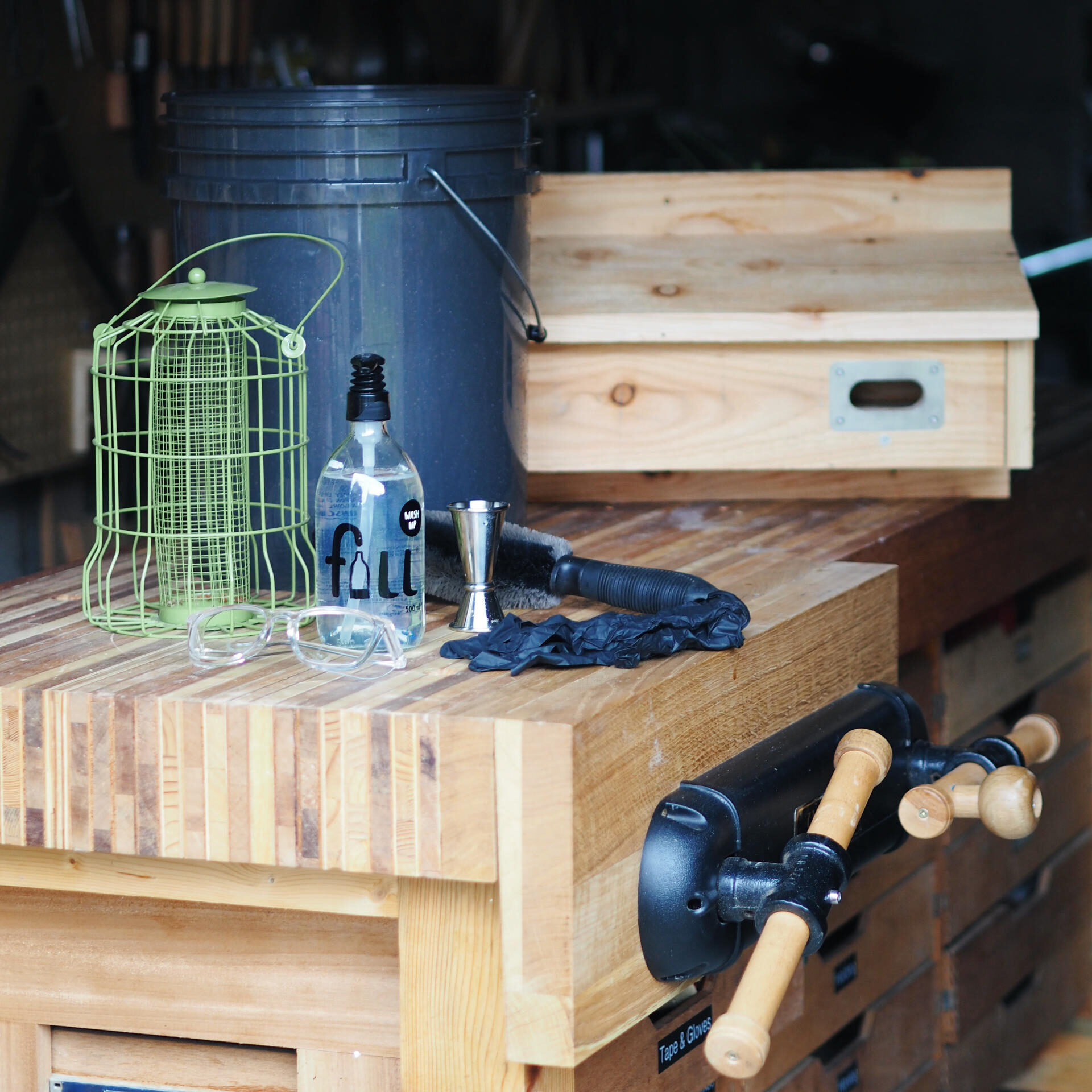
It’s nice to be important but it’s important to be niche.
When Nick, Co-Founder of Nestwood, got in touch to ask if he could write something for us about cleaning bird boxes using Fill goods we said hell, yeah! We sure do dig a niche cleaning guide! And with the RSPB recommending that seed and nut feeders go out in November, we figured that now would be a good time!
Over to Nick…
Fill has been a part of my life since moving to Scotland. Having grown up in the US, I was genuinely shocked when we got here by how difficult it was to avoid buying products in plastic. Broccoli? Plastic. Olive oil? Plastic. Deodorant, body wash, toothpaste? Plastic plastic plastic. Obviously the US has loads of things packaged in plastic too, but my favourite store, PCC (Puget Consumers Co-op), covered my daily essentials meaning I almost never had to come home with any plastic. After a few months, I discovered Ethical Consumer, and through their robust shopping guides I found Fill!
Although, now that I’m writing this, I’m remembering that it was actually my partner who discovered Fill, having fallen madly in love with the Fig Leaf-scented hand soap at our friends’ house. Credit where credit is due!
Anyway, my partner and I placed a huge order for a bunch of Fill bulk goods and we never looked back. I even built dedicated cubbies in our workshop so that we could hot-swap the 5 and 10L Bag in Boxes whenever we were running low on something. We will never go back to buying these products in any other format because Fill saves us from using loads of unnecessary plastic. They’ve made it easy to return empties (via Freepost no less) so you just drop off at your local post office and any plastic containers get rinsed and reused appropriately. The rest of the cardboard packaging goes into the recycling OR if you’re extra, like me, then into your Berkeley method home composting system!
Fill became an inspiration when I started making nest boxes. I knew there was no way that I would be using plastic in our products or packaging, and I work hard to remove it from our supply chain where I can. All Nestwood nest boxes, like Fill, come in cardboard packaging using only paper tape. Why anyone is doing packaging differently than this in 2026 is a mystery. And when I went to write how-to’s for our website about cleaning our bird boxes, I knew that Fill would be the only company I would recommend. Little did I know they would also have such cool people working for them that they would also let me write a guest blog!
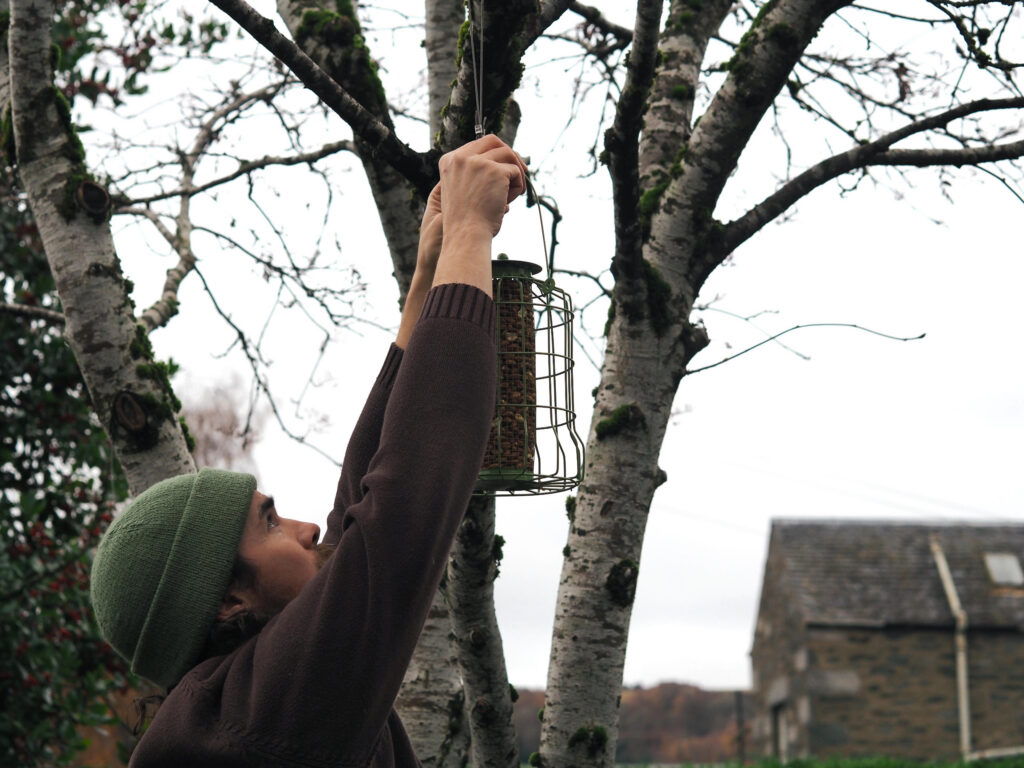
How to clean bird feeders using Fill
When I first read that I should regularly clean the bird feeders, I thought it sounded silly. They’re just birds, right? How much damage can some crusty old peanuts do? It turns out, not cleaning your feeders can potentially do quite a lot of damage and cleaning them regularly has been proven to reduce the overall risk of disease and parasitism in our avian friends.
You may have been hearing more about cleaning your bird feeders recently due to the fact that, as far back as 2005, a disease called Trichomonosis “caused epidemic mortality in Greenfinches and Chaffinches across the British Isles”, according to the British Trust for Ornithology (BTO). The largest bird protection charity in the world, the Royal Society for the Protection of Birds (RSPB), even changed its feeding guidance last year to “feed seasonally and safely,” instructing its nearly 1.2 million members to only feed the full range of British birds from 1 November to 30 April to try to reduce the transmission of the disease during the busiest feeding periods.
It seems like whether we should clean our bird feeders or not is no longer a question; we should all be doing it, so the next obvious question is: what is the best way to clean them without using unnecessary chemicals? Bleach is often recommended, but using it to scrub feeders and then pouring that bleach down our drains is clearly a no-go for those of us who think about the repercussions our cleaning products can have downstream. Luckily for us, Fill products give us an easy answer!
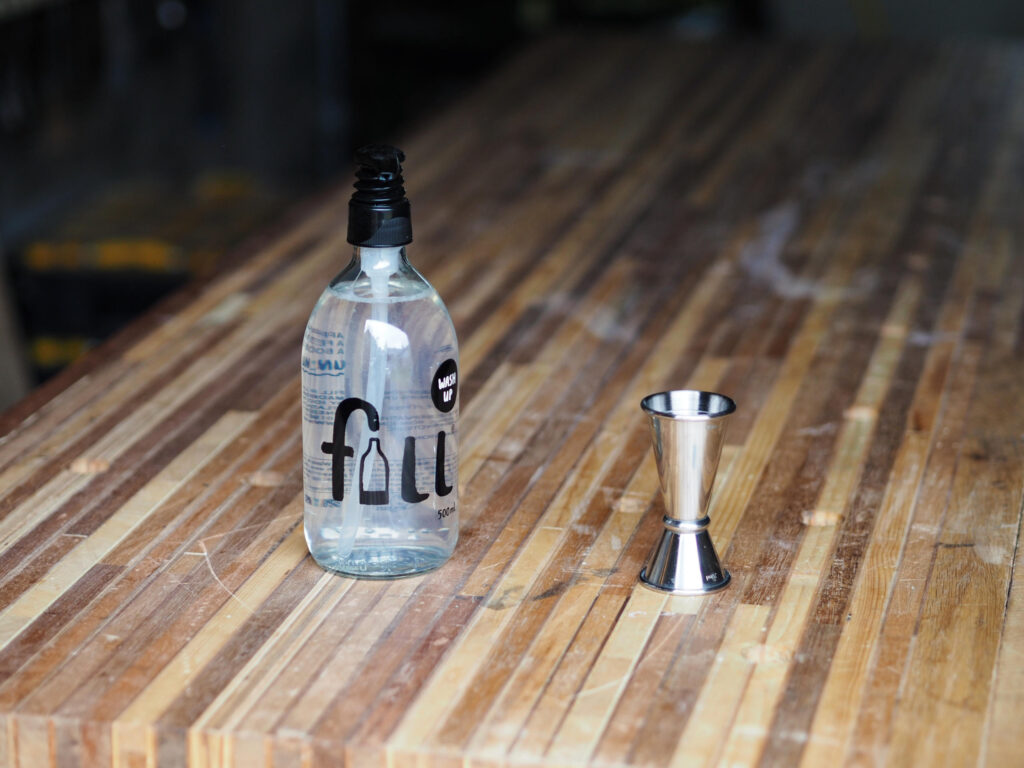
How to clean a bird feeder
I find it surprising, though others may not, that there is very little research around how to properly clean bird feeders. The one study that I could find compared whether scrubbing, bleaching, or a combination of both worked best for cleaning bird feeders and, unsurprisingly, found that bleach did kill more bacteria than just soap and water.
However (and this is a very important however and the reason why I like to read actual studies rather than just the headlines) the researchers clearly state that “all cleaning methods effectively reduced [bacteria] on feeders in the absence of debris… leaving an extremely low pathogen level that poses a minimal risk of disease transmission.” This means that even the soap and water scrubbing method was effective in reducing bacteria below a transmissible level so long as you remove all of the debris on the feeder. Brilliant! No bleach needed.
That makes cleaning our bird feeders so simple that our instructions can be a single sentence: Use soap and water to scrub your bird feeders until there is no visible debris left on them. We’ll go into a bit more detail to be sure, though…
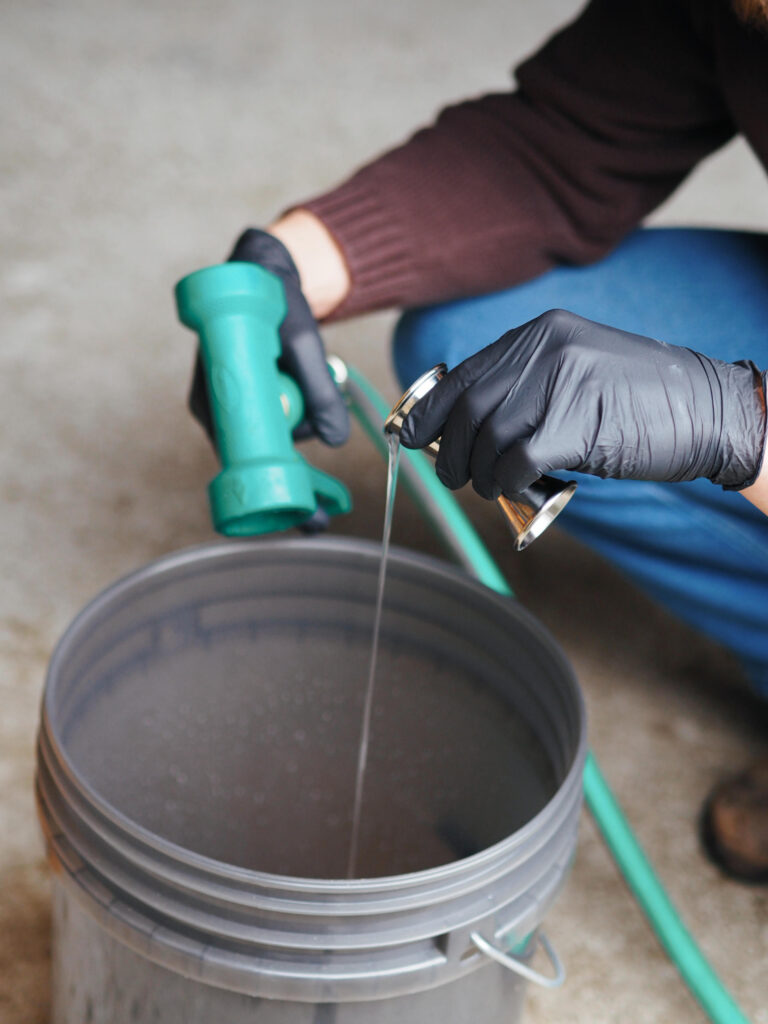
Step-by-step instructions for cleaning a bird feeder
1 – Fill a bucket (rather than your kitchen sink) with tap water and Fill washing up liquid at a ratio of 5mL washing up liquid to 2.5L of water (1:500). Make the mixture deep enough so that your feeder can be fully submerged.
2 – Empty any loose food or debris from your feeder and take any individual pieces of the feeder apart (if you can).
3 – Place all parts of the feeder into the soapy solution and soak for 5 minutes.
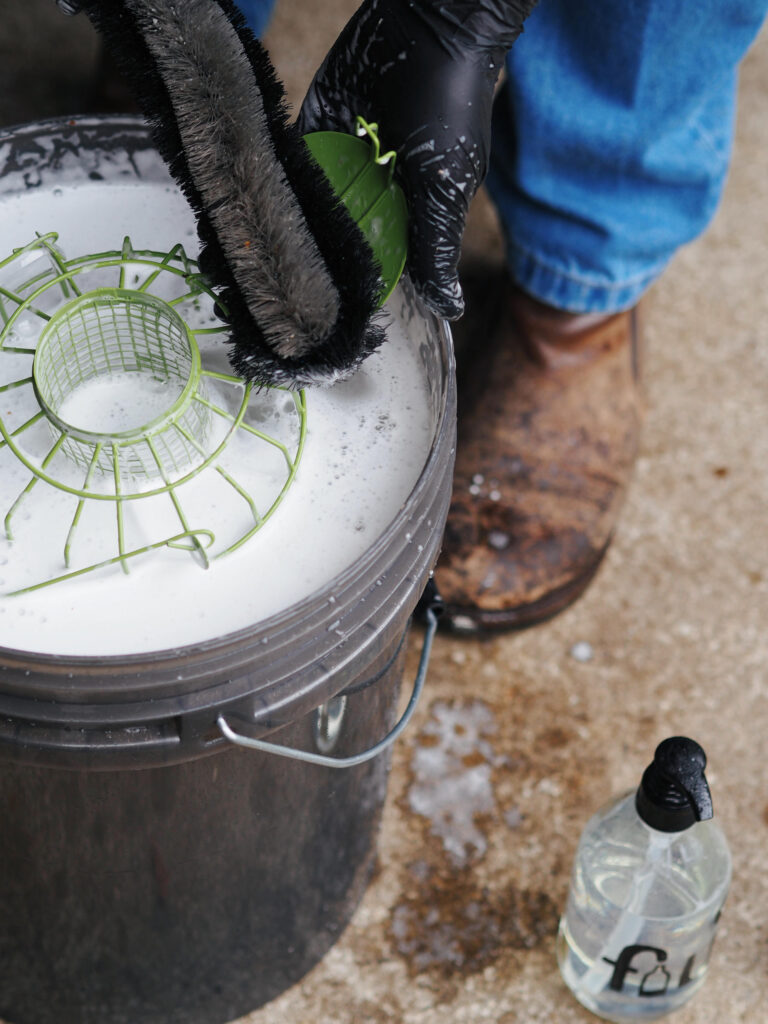
4 – Take a stiff-bristled brush (we recommend dedicating this brush forever as your bird brush) and scrub all of the parts of the feeder until there is no visible debris, for a minimum of 2 minutes.
5 – Wipe each part of the feeder with a sponge (if needed).
6 – Rinse each part of the feeder with clean tap water and leave to air dry.
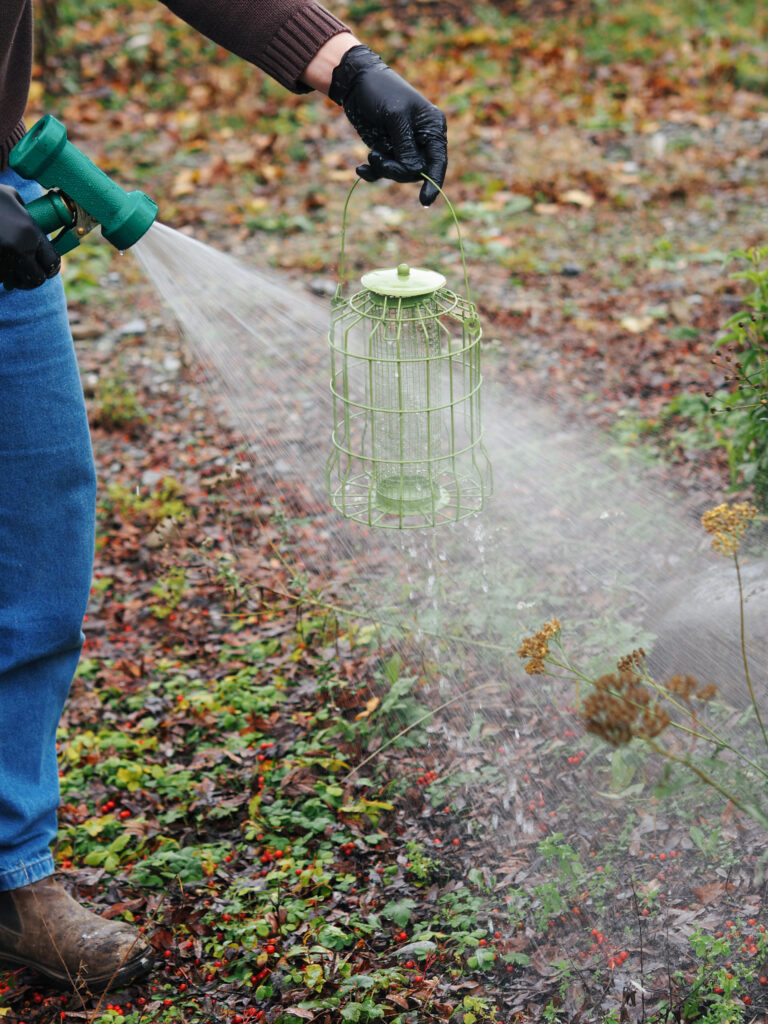
7 – Once dry, check that all debris has been removed. If any remains, repeat from step 3 until no debris remains.
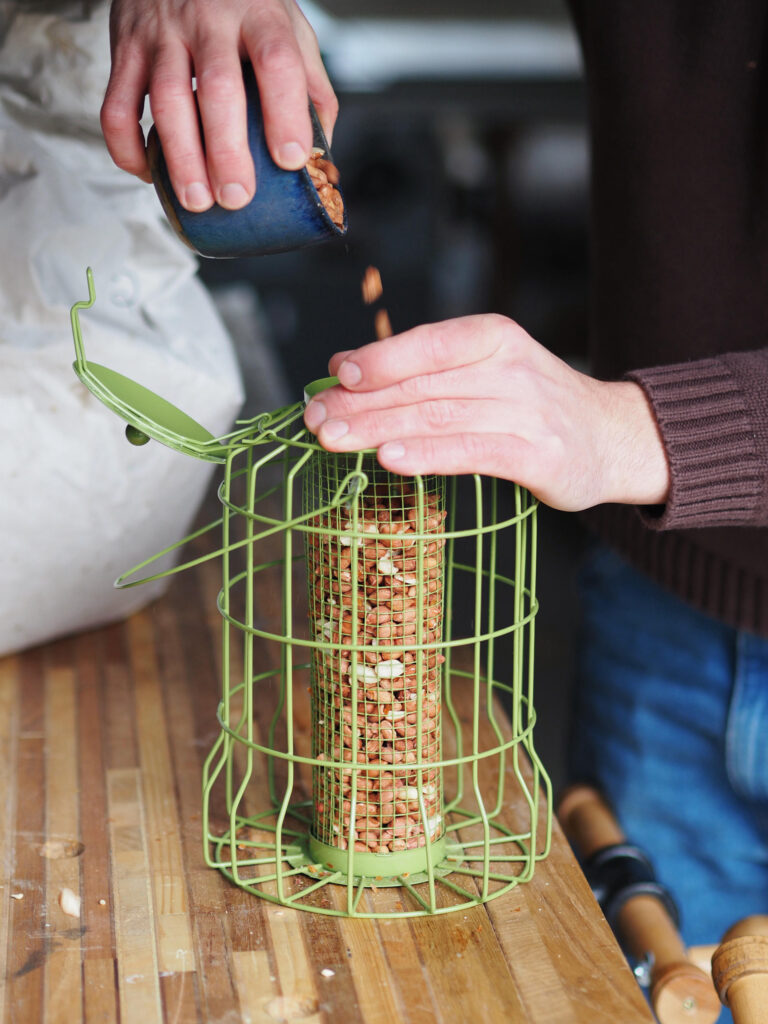
That’s it! Your bird feeders are now perfectly safe for your feathered friends and they can be refilled and returned to their rightful places in your garden.
CHECK OUT PART TWO FOR NICK’S CLEANING GUIDE TO NEST BOXES.
Citations:
Schaper, L., Hutton, P. & McGraw, K.J. Bird-feeder cleaning lowers disease severity in rural but not urban birds. Sci Rep 11, 12835 (2021). https://doi.org/10.1038/s41598-021-92117-y.
Feliciano, Lisa & Underwood, Todd & Aruscavage, Daniel. (2025). The effectiveness of bird feeder cleaning methods with and without debris. The Wilson Journal of Ornithology. 130. 313-320. 10.1676/16-161.1.


